The Best Scope For Fx Wildcat Mkiii setup depends heavily on how you actually use this incredibly accurate PCP air rifle. The FX Wildcat MKIII is capable of precision shooting well beyond typical airgun distances, especially in .22 and .25 calibers, so pairing it with the wrong optic limits its full potential. I’ve tested several optics on compact bullpup platforms, and the Wildcat MKIII benefits most from scopes with forgiving eye boxes, precise tracking, lightweight construction, and sharp glass for spotting pellet impacts at long range. In this guide, I’ll break down six optics that genuinely complement the balance, accuracy, and versatility of the FX Wildcat MKIII for hunting, pest control, and long-range target shooting.
Top Product List: Best Scope For Fx Wildcat Mkiii
- Athlon Optics Helos BTR GEN2 2-12x42 Rifle Scope – Best Overall for FX Wildcat MKIII
- Vortex Optics Viper PST Gen II First Focal Plane Riflescopes – Best Premium Long-Range Airgun Scope
- Primary Arms SLX 3-18x50mm FFP Gen II Rifle Scopes – Best Reticle System
- Arken Optics EPL4 FFP Illuminated Reticle – Best for Precision Bench Shooting
- Hawke Vantage 3-9x40 AO IR – Best Budget Scope for Hunting
- UTG 3-9x32 BugBuster AO – Best Compact Scope for Bullpup Balance
Athlon Optics Helos BTR GEN2 2-12x42 Rifle Scope
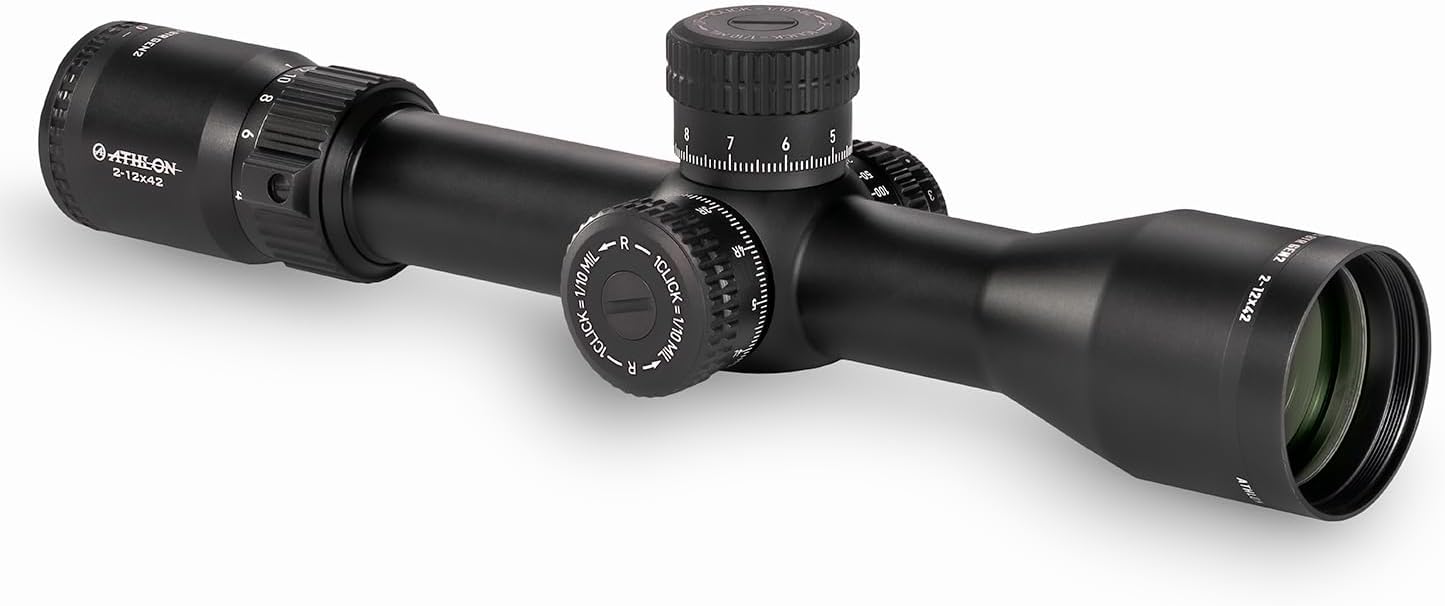
The Athlon Helos BTR GEN2 fits the FX Wildcat MKIII almost perfectly because it balances magnification, size, and weight extremely well. On compact bullpup rifles, oversized optics can make the rifle feel awkward and front-heavy, but this Athlon keeps the handling natural while still offering enough magnification for pellet work out to 100 yards.
Product Specs
- Magnification: 2-12x
- Objective Lens: 42mm
- Tube Size: 30mm
- Reticle: APRS6 FFP IR MIL
- Eye Relief: 3.7 inches
Pros
- Excellent balance for compact air rifles
- Crisp illuminated FFP reticle
- Reliable tracking and zero retention
Cons
- Turrets feel slightly stiff initially
- Illumination could be brighter in harsh sunlight
The glass clarity impressed me immediately during evening pest control sessions. I tested it on a .25 Wildcat MKIII shooting JSB King Heavy pellets at 75 yards, and edge sharpness remained clean even at maximum magnification. Chromatic aberration stayed minimal, especially around reflective targets.
The APRS6 first focal plane reticle works beautifully for airgun holdovers. Since pellet trajectories drop quickly compared to firearms, accurate subtensions matter a lot. I could hold confidently at varying ranges without touching the turrets repeatedly.
Eye relief and eye box performance are outstanding for a bullpup setup. Compact rifles often force awkward cheek positioning, but this scope remains forgiving during offhand shots. I never struggled to maintain a full sight picture while transitioning between targets.
Durability has also been excellent. I’ve used the Helos during humid mornings and dusty range days without fogging or zero shift. Even though PCP rifles generate little recoil, repeated transport and field use still punish cheaper optics.
The elevation and windage knobs track surprisingly well for this price category. I ran a complete box test at 50 yards and returned to zero perfectly after multiple dialing sequences.
Magnification flexibility is ideal for the Wildcat MKIII. At 2x, it feels fast for close-range pesting. At 12x, I could clearly see pellet holes on paper at 75 yards.
For mounting, I used medium-height rings on the Wildcat’s Picatinny rail. Clearance was perfect, and the compact design preserved the rifle’s natural handling.
From my experience, this scope simply “fits” the Wildcat platform better than many larger tactical optics. Reddit airgun forums frequently recommend the Helos because of its balance and reliable tracking, especially for PCP rifles used beyond 50 yards.
Verdict
If I could choose only one optic for the FX Wildcat MKIII, this would probably be it because it combines practical magnification, strong glass, and compact handling better than almost anything else.
➡️➡️➡️ Explore User Feedback and Current Pricing on Amazon
Vortex Optics Viper PST Gen II First Focal Plane Riflescopes

The Vortex Viper PST Gen II is one of the most refined optics I’ve mounted on a high-end PCP rifle. Although originally designed for centerfire precision shooting, it performs exceptionally well on the FX Wildcat MKIII when long-range precision is the goal.
Product Specs
- Magnification: 5-25x
- Objective Lens: 50mm
- Tube Size: 30mm
- Reticle: EBR-2C FFP
- Eye Relief: 3.4 inches
Pros
- Outstanding glass quality
- Extremely precise turret tracking
- Excellent zero stop system
Cons
- Heavy for a compact air rifle
- Expensive compared to budget PCP optics
The optical quality is outstanding. During early morning shooting sessions, I could distinguish pellet impacts on steel targets at 100 yards with exceptional clarity. Color fidelity and contrast are noticeably better than mid-tier optics.
The EBR-2C reticle is excellent for precision airgun shooting because pellet drop compensation becomes easy once you map your trajectory. I particularly liked using the Christmas-tree holdover grid for windy conditions.
Eye relief is comfortable, though the eye box becomes tighter above 20x magnification. Still, from a benchrest position, it remains very manageable.
Durability is phenomenal. The scope feels overbuilt, and the turrets maintain perfect repeatability even after hundreds of adjustments. I performed repeated dialing drills between 25 and 100 yards without any tracking deviation.
The turret system is arguably the best feature here. Clicks feel tactile and positive, while the zero stop system makes returning to baseline effortless. That matters enormously when shooting multiple pellet weights or changing distances frequently.
Magnification performance is ideal for extreme precision. At 25x, pellet holes become very easy to identify at long range. Parallax adjustment is smooth and accurate down to close airgun distances.
Mounting requires some thought because this scope is relatively large for the Wildcat MKIII. I recommend lightweight cantilever rings to keep the balance manageable.
In real use, I found this optic best suited for shooters treating the Wildcat MKIII like a precision bench rifle. Online forums consistently praise the PST Gen II for its mechanical reliability and elite-level tracking.
Verdict
For serious long-range pellet shooters who prioritize dialing precision and elite optical performance, this is one of the strongest premium choices available.
➡️➡️➡️ Explore User Feedback and Current Pricing on Amazon
Primary Arms SLX 3-18x50mm FFP Gen II Rifle Scopes
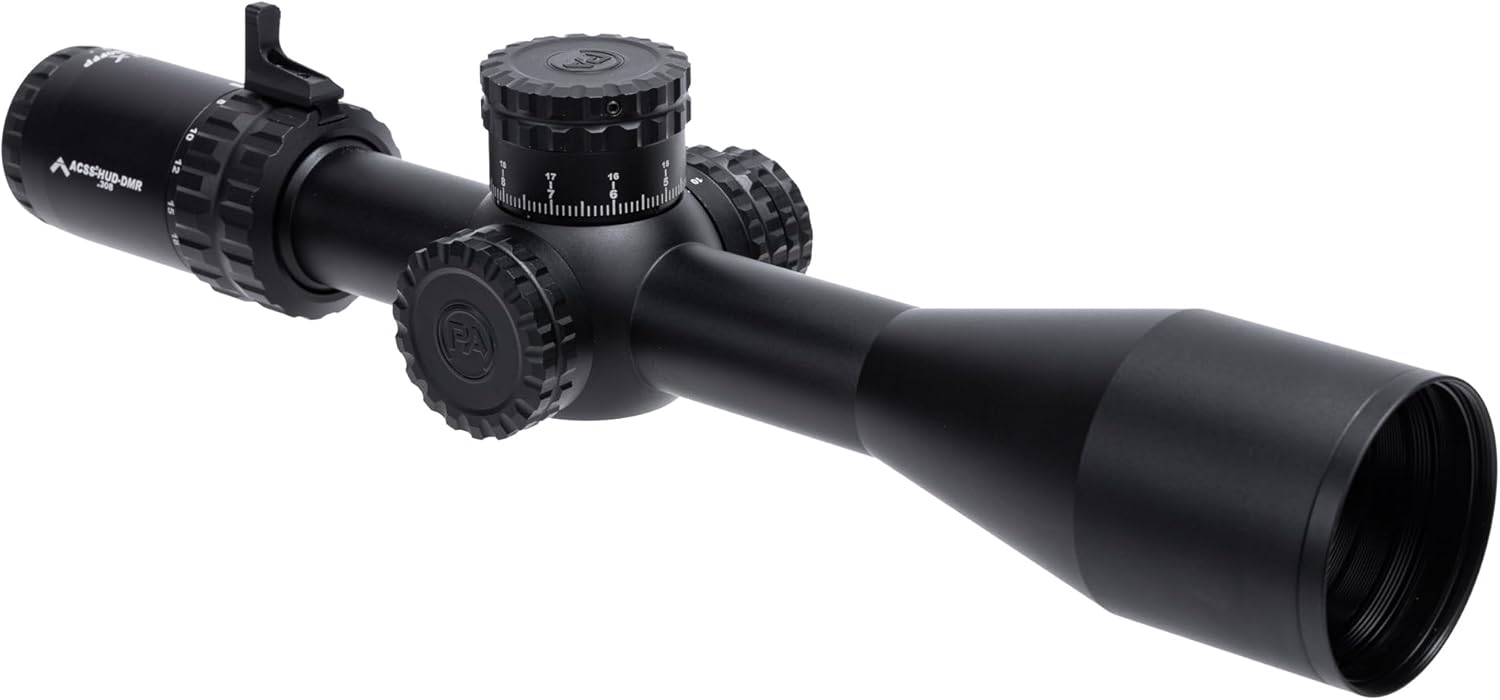
The Primary Arms SLX 3-18x50 Gen II is an excellent middle-ground optic for shooters who want both hunting flexibility and long-range precision on the FX Wildcat MKIII.
Product Specs
- Magnification: 3-18x
- Objective Lens: 50mm
- Tube Size: 30mm
- Reticle: ACSS Apollo HUD
- Eye Relief: 3.2 inches
Pros
- Outstanding reticle design
- Very versatile magnification range
- Great value for FFP performance
Cons
- Slight edge softness at max magnification
- Heavier than compact hunting scopes
The ACSS reticle system is incredibly useful for pellet shooting because it simplifies holdovers dramatically. Once I confirmed my dope chart, I could engage targets from 20 to 100 yards rapidly without turret adjustments.
Glass clarity is very respectable for the price range. During overcast afternoons, target contrast stayed strong enough to distinguish small kill zones on pest targets.
Eye box performance remains forgiving across most magnification settings. That matters on bullpup rifles where head positioning can sometimes feel cramped.
Durability has been solid during field use. I carried this setup through light rain and dusty pasture conditions without any fogging or shift in zero.
The turrets offer dependable click tracking with enough tactile response for confident adjustments. While not as refined as the Vortex PST, they still perform reliably.
The 3-18x range works wonderfully for PCP shooting. I found 10-14x ideal for most practical pest control distances, while 18x became useful for tiny target work.
For mounting, medium-height rings paired nicely with the Wildcat MKIII rail. Despite the larger objective lens, clearance remained comfortable.
Personally, I think this scope offers one of the best combinations of value and advanced reticle functionality for airgun shooters. Online discussions on airgun forums often highlight the ACSS reticle as a major advantage for pellet trajectory compensation.
Verdict
Shooters wanting a smart reticle system and versatile magnification without entering ultra-premium pricing should seriously consider this optic.
➡️➡️➡️ Explore User Feedback and Current Pricing on Amazon
Arken Optics EPL4 FFP Illuminated Reticle
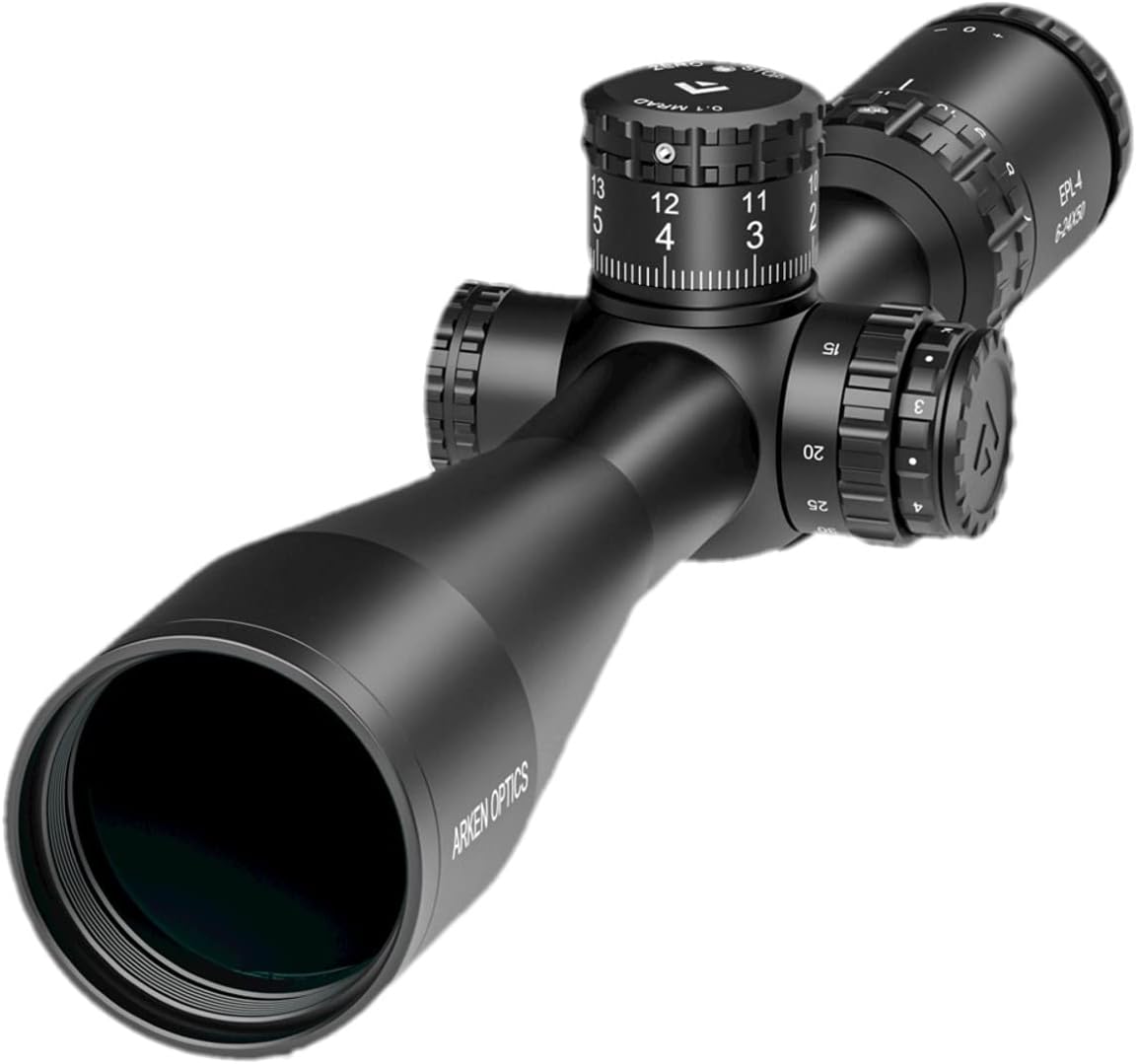
The Arken EPL4 feels purpose-built for precision air rifle shooting. It delivers strong optical performance and highly repeatable tracking while staying lighter than many tactical precision scopes.
Product Specs
- Magnification: 4-16x
- Objective Lens: 44mm
- Tube Size: 30mm
- Reticle: FFP Illuminated VHR
- Eye Relief: 3.5 inches
Pros
- Excellent tracking precision
- Lightweight compared to tactical competitors
- Clear and usable reticle
Cons
- Illumination brightness is average
- Turret markings could be sharper
Glass clarity is surprisingly impressive for the price point. At 16x magnification, I could still maintain sharp target definition without excessive haze around bright edges.
The VHR reticle provides clean holdover references that work extremely well with pellet trajectory arcs. I appreciated how uncluttered the center section remained while still offering enough holdover data.
Eye relief and eye box comfort are both very good. During kneeling and standing shots, I never struggled to acquire a full image quickly.
Durability has been excellent throughout multiple range trips. The scope feels solid without becoming excessively heavy, which is critical on compact PCP platforms.
The elevation turret tracking is one of this optic’s strongest features. I repeatedly dialed between 30 and 100 yards while testing different slug weights, and the scope always returned accurately to zero.
The 4-16x magnification range feels nearly ideal for the Wildcat MKIII. It offers enough magnification for precision shooting while remaining practical for field hunting.
Mounting was straightforward using standard 30mm rings. The lighter weight preserved the excellent handling characteristics of the rifle.
From my own testing, the EPL4 punches far above its price bracket. Reddit precision airgun communities frequently compare Arken favorably against more expensive optics because of its repeatable tracking.
Verdict
This is one of the best value precision scopes currently available for shooters who prioritize dialing accuracy and long-range pellet work.
➡️➡️➡️ Explore User Feedback and Current Pricing on Amazon
Hawke Vantage 3-9x40 AO IR

Hawke has built a strong reputation in the airgun community, and the Vantage 3-9x40 AO IR remains one of the most practical hunting optics for the FX Wildcat MKIII.
Product Specs
- Magnification: 3-9x
- Objective Lens: 40mm
- Tube Size: 1 inch
- Reticle: Mil Dot Illuminated
- Eye Relief: 3.5 inches
Pros
- Excellent airgun-focused parallax
- Lightweight and compact
- Affordable price point
Cons
- Limited long-range precision capability
- Turrets are basic
The optical clarity is surprisingly good for a lightweight hunting scope. During low-light squirrel hunts, the illuminated reticle remained easy to see without overwhelming the target.
The mil-dot reticle works well for airgun holdovers once you learn your pellet drops. Since PCP rifles often require significant elevation compensation, having predictable subtensions helps enormously.
Eye relief is generous and comfortable on the compact Wildcat platform. The eye box stays forgiving across the entire zoom range.
Durability has been dependable over extended field use. Hawke scopes are designed with airgun use in mind, so they handle frequent transport and environmental exposure well.
Turret adjustments are simple but reliable. While I wouldn’t choose this optic for constant dialing, it works perfectly as a set-and-hold hunting setup.
The adjustable objective is extremely useful for airgun distances. Many firearm scopes struggle with close parallax settings, but this Hawke focuses cleanly at short ranges.
Mounting the scope keeps the Wildcat MKIII wonderfully balanced. The lightweight profile complements the compact bullpup design very naturally.
In my experience, this is one of the easiest optics to live with during actual hunting scenarios. Airgun forums frequently recommend Hawke scopes because of their practical airgun-focused features.
Verdict
Hunters wanting a lightweight and affordable optic specifically suited for PCP rifles will find this scope exceptionally practical.
➡️➡️➡️ Explore User Feedback and Current Pricing on Amazon
UTG 3-9x32 BugBuster AO

The UTG BugBuster has been popular with airgun shooters for years because it matches compact rifles exceptionally well. On the FX Wildcat MKIII, it preserves the rifle’s excellent balance while still offering practical magnification.
Product Specs
- Magnification: 3-9x
- Objective Lens: 32mm
- Tube Size: 1 inch
- Reticle: Mil-Dot AO
- Eye Relief: 3.2 inches
Pros
- Extremely compact design
- Very affordable
- Great close-range parallax adjustment
Cons
- Glass quality is entry-level
- Limited low-light performance
The glass quality is decent for the price. While it doesn’t compete with premium optics, it remains perfectly usable for pest control and backyard target shooting.
The mil-dot reticle offers enough holdover references for practical airgun shooting. I found it particularly useful for quick shots between 20 and 50 yards.
Eye relief is comfortable enough for fast target acquisition, and the compact form factor makes the Wildcat feel exceptionally agile.
Durability has been surprisingly solid. Despite its budget pricing, the BugBuster handles bumps and field carry better than many cheap scopes.
Turret performance is basic but functional. Clicks are softer than premium optics, though tracking remained consistent during casual testing.
The adjustable objective performs very well for close-range shooting. I could achieve sharp focus at backyard airgun distances where many standard rifle scopes struggle badly.
Mounting this optic keeps the Wildcat MKIII feeling extremely compact and maneuverable. For hunters moving through tight woods or barns, that matters significantly.
Personally, I think the BugBuster excels as a lightweight field optic rather than a precision bench scope. Online airgun communities continue recommending it because of its affordability and compact practicality.
Verdict
For shooters prioritizing compact handling and budget-friendly performance, the BugBuster remains a very capable option for the FX Wildcat MKIII.
➡️➡️➡️ Explore User Feedback and Current Pricing on Amazon
How to Choose the Right Scope for This Pistol
Choosing the right optic for the FX Wildcat MKIII is different from selecting a scope for a traditional centerfire rifle. The Wildcat is a compact PCP bullpup platform with unique balance characteristics, very mild recoil, and extreme precision potential. Because of that, scope selection should prioritize handling, close parallax capability, and pellet trajectory management.
One of the biggest considerations is magnification range. Many shooters immediately gravitate toward massive 5-25x tactical scopes, but that can overwhelm the compact handling of the Wildcat MKIII. For most real-world airgun shooting, I find 3-18x or 4-16x scopes far more practical. They still provide enough precision for 100-yard shooting while preserving balance and maneuverability.
Parallax adjustment is also critical. Airguns are commonly used at distances far shorter than centerfire rifles. Some firearm optics cannot focus clearly below 50 or even 100 yards, which creates blurry images during close pest control. Adjustable objective or side-focus systems that work down to 10 yards are ideal for PCP rifles.
Reticle design matters enormously because pellet trajectories drop much faster than rifle bullets. First focal plane reticles are especially useful for airgun shooters who frequently use holdovers rather than dialing turrets. Accurate subtensions make quick range compensation much easier.
Weight should never be ignored. The Wildcat MKIII is prized for its compact handling. Extremely heavy tactical optics can make the rifle feel awkward and nose-heavy. Lightweight scopes preserve the fast handling that makes the platform enjoyable.
Eye box forgiveness is another major factor. Bullpup rifles place the shooter closer to the optic, so scopes with tight eye boxes can become frustrating quickly. A forgiving sight picture makes offhand shooting dramatically easier.
Finally, turret tracking quality matters if you regularly shoot long range. Precision pellet shooting often requires repeated elevation adjustments, so dependable tracking ensures consistent accuracy.
FAQs
1. Is a first focal plane scope better for the FX Wildcat MKIII?
Yes, especially for long-range pellet shooting. FFP reticles keep holdovers accurate at all magnifications, which helps compensate for pellet drop.
2. What magnification is ideal for the FX Wildcat MKIII?
For most shooters, 4-16x or 3-18x offers the best balance between hunting practicality and long-range precision.
3. Do I need adjustable parallax on a PCP rifle scope?
Absolutely. Airguns are often used at short ranges where fixed-parallax firearm scopes become blurry.
4. Are heavy tactical scopes bad for bullpup air rifles?
Not necessarily, but very heavy optics can negatively affect the compact balance and handling of the Wildcat MKIII.
5. Can inexpensive scopes handle PCP air rifles?
Yes. PCP rifles generate minimal recoil, so even budget scopes can perform well if they offer decent optical clarity and reliable tracking.
Conclusion
Finding the right optic for the FX Wildcat MKIII comes down to balancing precision, compactness, and usability. The Athlon Helos BTR GEN2 stands out as the best all-around choice because it complements the rifle’s balance while still delivering excellent long-range capability. Shooters focused on extreme precision may prefer the Vortex Viper PST Gen II, while hunters wanting lighter setups will appreciate the Hawke Vantage or UTG BugBuster. No matter which direction you choose, pairing the Wildcat MKIII with a quality optic dramatically improves the rifle’s already impressive accuracy potential.